Guide 03 · Safety
Bee handling equipment & safety
The gear that matters, and how to move around a hive calmly.
The African honeybee is more defensive, not more dangerous
The subspecies kept across Zimbabwe defends its colony more readily than the gentler European bees many imported beekeeping guides are written about — it responds faster to disturbance and can follow further than you’d expect. That’s a reason to work carefully and wear proper gear, not a reason to avoid keeping bees. Calm, deliberate movement, the right protective equipment, and a smoker used correctly account for the overwhelming majority of safe, sting-free inspections.
Essential protective gear
Veil
Non-negotiable. Fine mesh over the face, secured so no gap exists at the neck — most stings that cause real fear happen at the face and neck, and a good veil removes that risk entirely.
Suit or jacket
Light-coloured, smooth fabric — bees react more defensively to dark, rough materials that resemble a natural predator like a honey badger. Tuck the suit into boots and gloves so there’s no loose entry point.
Gloves
Leather or thick rubber gloves that still let you feel the hive tool and frames. New beekeepers should wear them every time; more experienced hands often go bare-handed for gentler tasks, but that’s a choice to grow into, not to start with.
Boots
Sturdy, ankle-high, with trousers tucked in. Bees investigate gaps at ground level as readily as at the veil.
Using a smoker correctly
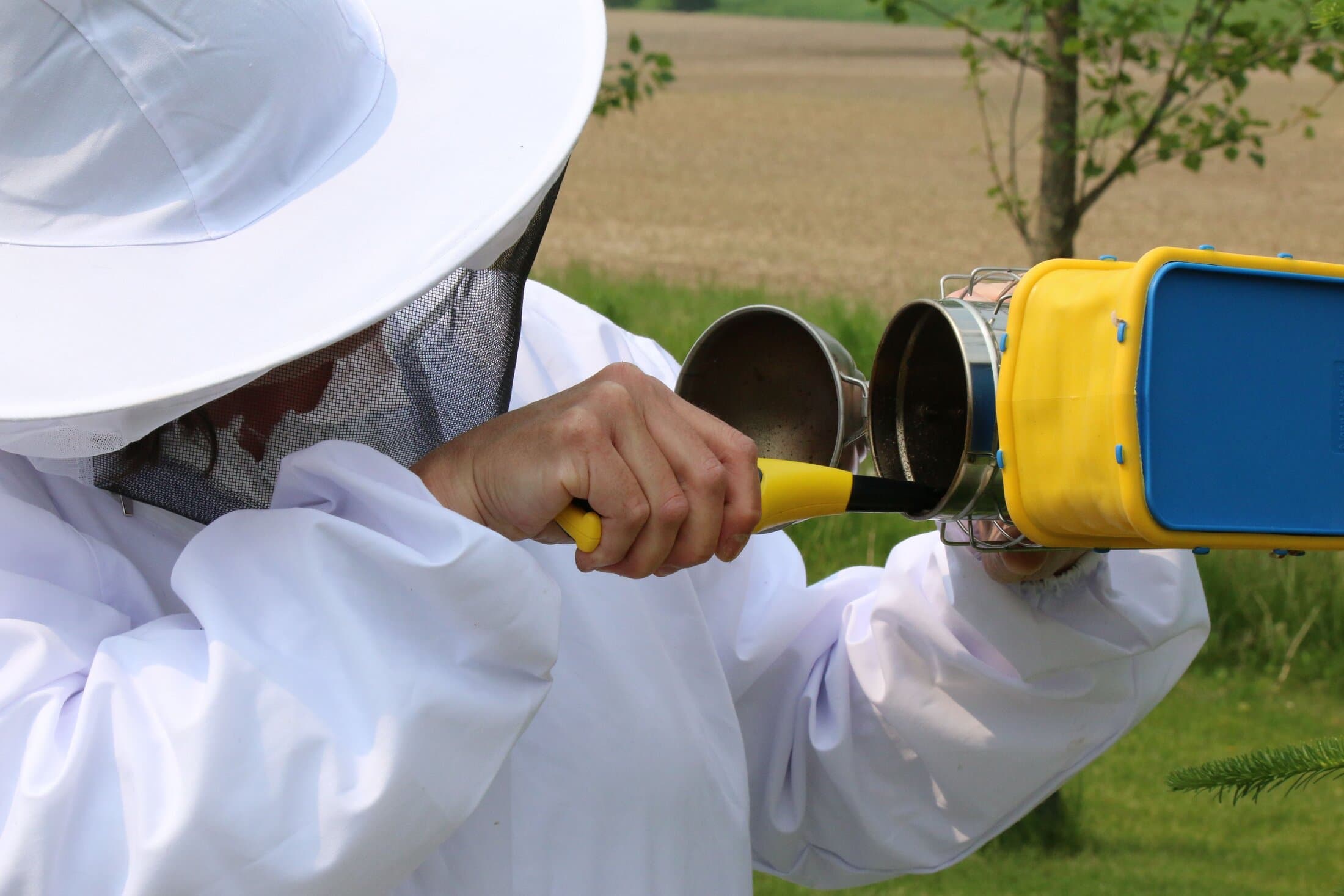
A few gentle puffs of cool smoke at the hive entrance, given a minute to take effect before you open anything, masks the alarm pheromone guard bees release when disturbed — which is the single biggest thing that keeps an inspection calm. Smoulder dry grass, pine needles or dried cow dung rather than anything that burns hot or fast; you want smoke, not flame, and you want it cool enough to touch the back of your hand comfortably. Over-smoking stresses the colony and can taint honey, so a light touch at the start of the inspection, with a little more only if bees are becoming agitated, is the right approach.
Working the hive itself
- Approach from the side or rear, never head-on into the entrance flight path.
- Move slowly and avoid standing directly in front of the entrance for long — you’re blocking the runway bees use to come and go.
- Use the hive tool to break propolis seals gently rather than prying hard, which jars the whole hive and agitates bees throughout.
- Keep inspections short — fifteen minutes is usually enough to see what you need; the longer a hive stays open, the more defensive it becomes.
- Avoid beekeeping in the heat of the afternoon or during a thunderstorm approach — bees are noticeably calmer in the cooler morning hours.
- Never work a hive after being stung without re-smoking first — a fresh sting releases alarm pheromone that agitates nearby bees.
If you’re stung
Scrape the stinger out sideways with a fingernail or hive tool rather than pinching it — pinching squeezes more venom in. Move away from the hive calmly rather than swatting, which agitates the colony further. Wash the site, and a cold compress eases most swelling. A normal reaction is localised pain, redness and mild swelling that settles within a day. Difficulty breathing, swelling of the face or throat, dizziness or a rash spreading well beyond the sting site are signs of a serious allergic reaction and need urgent medical attention — keep this in mind especially for anyone working an apiary for the first time, and always keep a phone and a way to reach help when inspecting alone.