Guide 04 · Colonies & history
Bee colonies, behaviour & history
How a hive actually works, and where Chipinge’s beekeeping tradition comes from.
Inside a colony
A honeybee colony is one organism made of tens of thousands of individuals working to a strict division of labour:
- The queen — one per colony, laying up to 1,500 eggs a day at her peak and holding the colony together through pheromones the whole hive can detect.
- Worker bees — all female, and the vast majority of the colony. A worker moves through jobs as she ages: cleaning cells, feeding larvae, building comb, guarding the entrance, then finally foraging for nectar, pollen and water in her last weeks of life.
- Drones — male bees, produced in smaller numbers, whose only role is mating with virgin queens from other colonies.
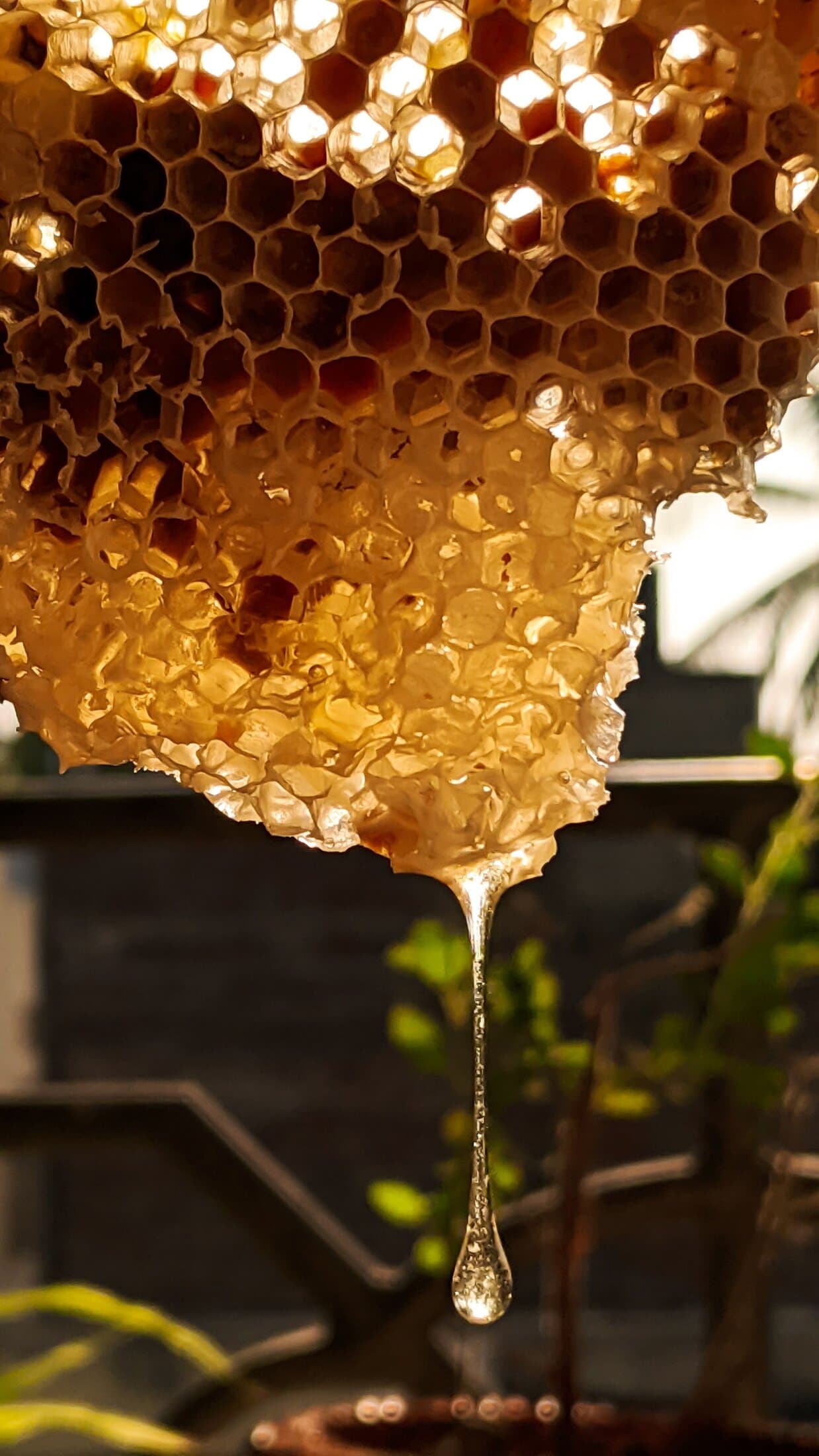
The colony’s central project is comb — hexagonal wax cells used to raise brood and store honey and pollen. Reading a comb tells you almost everything about a colony’s health: a solid, consistent brood pattern signals a strong, well-mated queen, while a patchy or spotty pattern is often the first visible sign something needs attention, which is exactly what an inspection is looking for.
Temperament and swarming
The African honeybee kept across Zimbabwe is quicker to defend its colony than the European subspecies most international beekeeping material assumes — a trait worth respecting, not fearing. It’s also a prolific swarmer: when a colony outgrows its space, or in response to the start of the rains, roughly half the workers will leave with the old queen to found a new colony elsewhere, while a newly raised queen takes over the original hive. This is precisely why baiting an empty hive works so reliably as a way to acquire a first colony — swarms are actively searching for a new home and readily accept a well-placed, welcoming hive.
A tradition older than living memory
Beekeeping in this part of Zimbabwe is not a recent introduction. Rock paintings in the Matopo Hills depict people harvesting from wild colonies, evidence that puts organised honey hunting here at least as far back as the 18th century, and likely further. For generations since, rural households have kept simple bark, log, clay pot and even tin-can hives in the surrounding forest — a practice many Chipinge beekeepers today can trace directly through parents and grandparents who did the same, often described simply as keeping hives “in the forest,” close to where the bees already were.
Formal extension support began decades later — commercial-scale beekeeping is generally dated to the early 1960s, when the first government apiculture extension officers began working with commercial farmers, reaching around 650 tonnes of annual production among that group alone within a few years. What took much longer to reach was investment in rural, communal-area beekeeping, which only expanded significantly from the 1990s onward as NGOs and the Forestry Commission began promoting movable-comb hives — first Kenya Top Bar designs, later some Langstroth equipment — as a way to lift both honey yields and forest conservation outcomes together in exactly the districts, Chipinge among them, where thick forest cover and rural livelihoods depend on each other.
That two-part history — an unbroken indigenous practice, and a more recent wave of better tools layered on top of it — is worth keeping in mind throughout the rest of these guides. Nothing here is asking Chipinge beekeepers to abandon what already works. It’s asking them to keep good records of it.